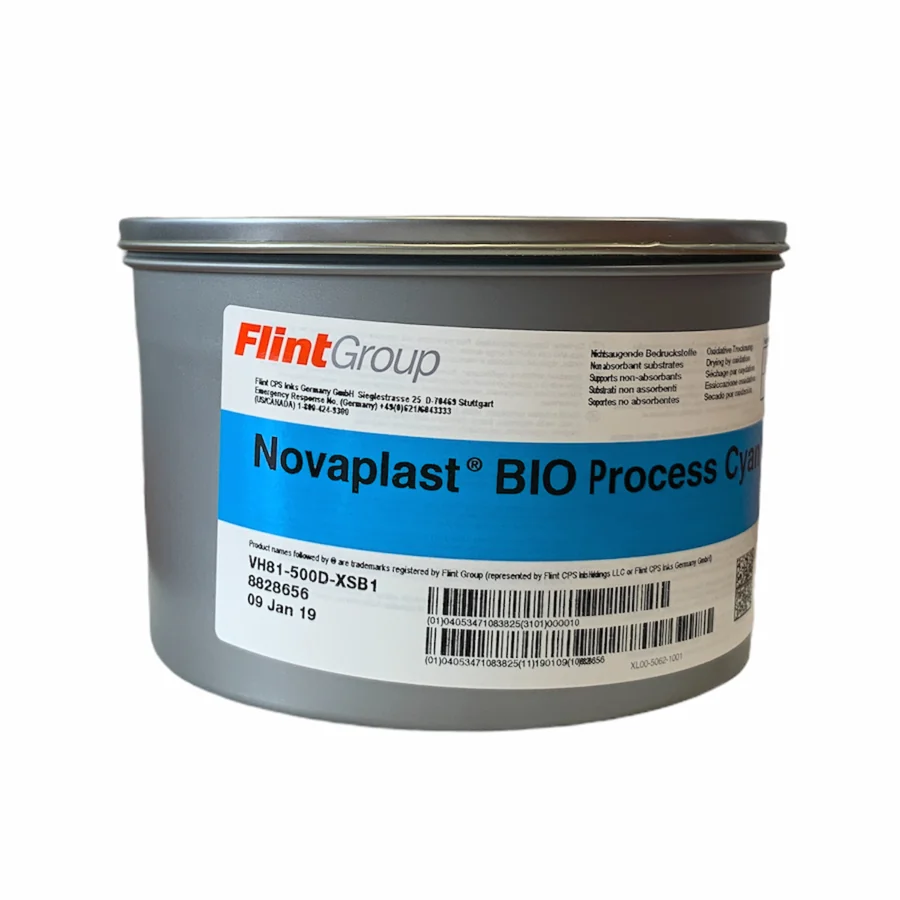
Choose CMYK process inks for your paper, press and planned finishing. Then compare K+E series for conventional sheet-fed offset and download their technical data sheets.
Which process inks should you compare?
Start by identifying any production issues, then compare the properties of each series. Determine the processing time by conducting a test on your specific substrate.
You are printing food packaging and must monitor migration throughout the entire process.
An inline water-based varnish is mandatory. No direct contact between the ink and the food.
Food packaging limitations
Important: The following series are excluded: F908, F700, F918, C1090, F900, C990, F950 and Novaplast BIO. Do not use these inks for food packaging without a functional barrier. For such packaging, select P670 PRIME only with complete process control and mandatory inline water-based coating.
For papers prone to picking (fiber tearing)
Novastar® F908 LOW TACK BIO
Are you printing on paper that is sensitive to fiber picking? Choose a printing ink with reduced tack. Novastar F908 LOW TACK BIO combines versatile application with a stable ink-water balance.
What are the benefits for your printing process?
Reduced tack helps minimize paper surface picking.
High gloss and abrasion resistance contribute to the quality of the finished print.
The formulation, based on renewable raw materials, is also suitable for perfecting (double-sided) printing.
What should you look out for?
Select a product series based on the paper’s susceptibility to picking and the required print resistance.
Application and properties
Substrates
Coated and uncoated papers and cardboards, including those prone to picking
Presses
Multicolour sheet-fed presses, including perfecting
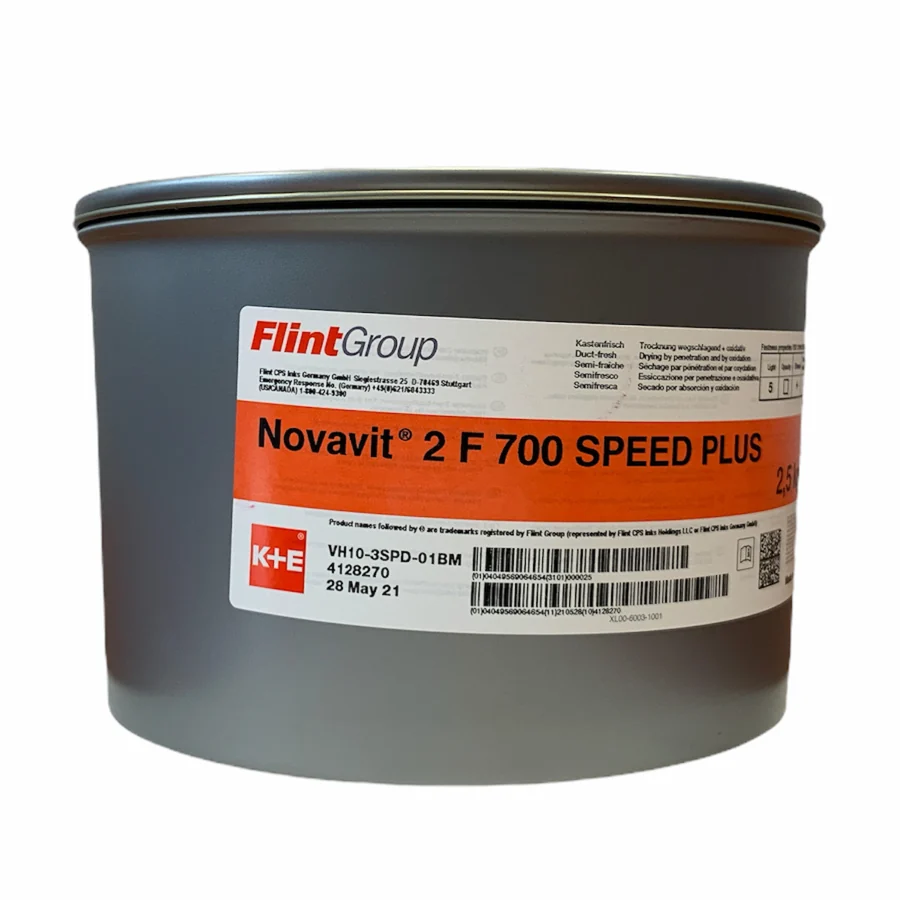
If you print at high speeds and require efficient post-press processing, consider Novavit F700 SPEED PLUS. This printing ink sets rapidly on the substrate and is well-suited for high-speed, in-line printing presses.
What are the benefits for your printing process?
Rapid setting facilitates the subsequent processing of printed sheets.
The binder system minimizes ink misting at high operating speeds.
A stable ink-water balance and high rub resistance ensure consistent, repeatable printing results.
What should you look out for?
Description and Polish data sheet for the SPEED PLUS version.
Application and properties
Substrates
Primarily glossy and matte coated papers and boards; also uncoated substrates
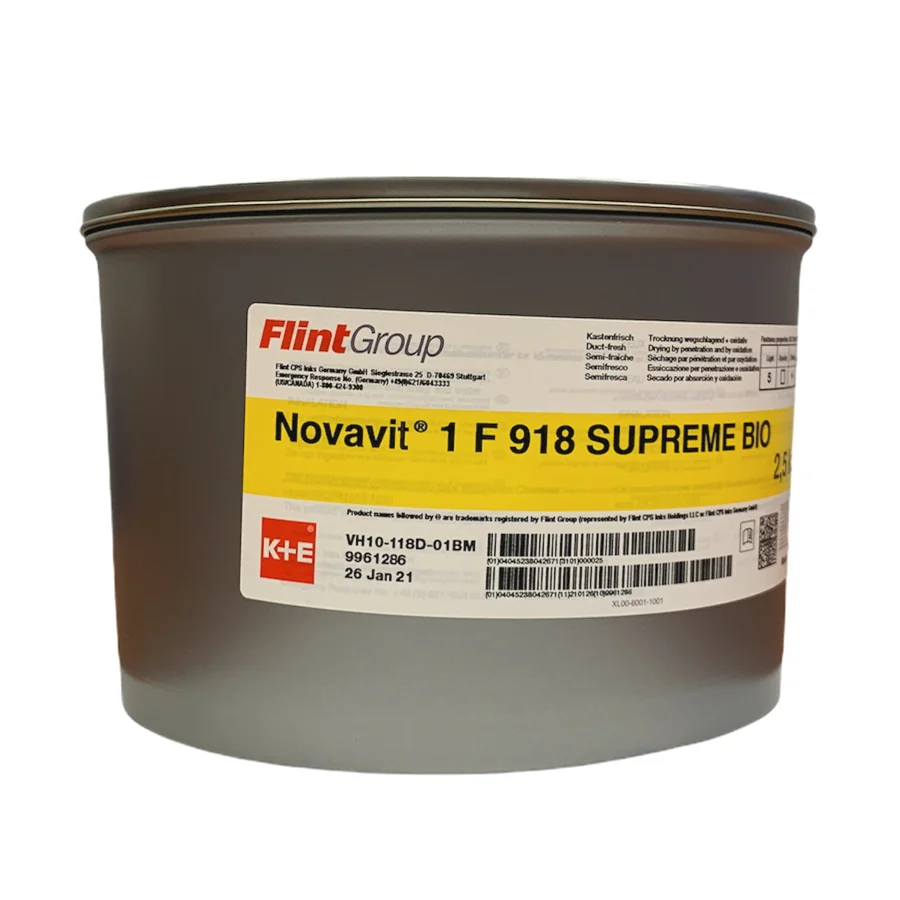
Looking for a process ink for perfecting (double-sided) printing and fast post-press processing? Novavit F918 SUPREME BIO offers high color intensity and stable performance on perfecting presses.
What are the benefits for your printing process?
Very fast setting helps prepare sheets for further processing.
High gloss and rub resistance ensure excellent print quality.
This series is suitable for printing with reduced alcohol content.
What should you look out for?
Always check the print’s resistance properties before proceeding with further processing.
Application and properties
Substrates
Coated papers and paperboards: glossy and matte. also for uncoated substrates
Presses
Multicolor sheetfed presses, including those with perfecting capabilities
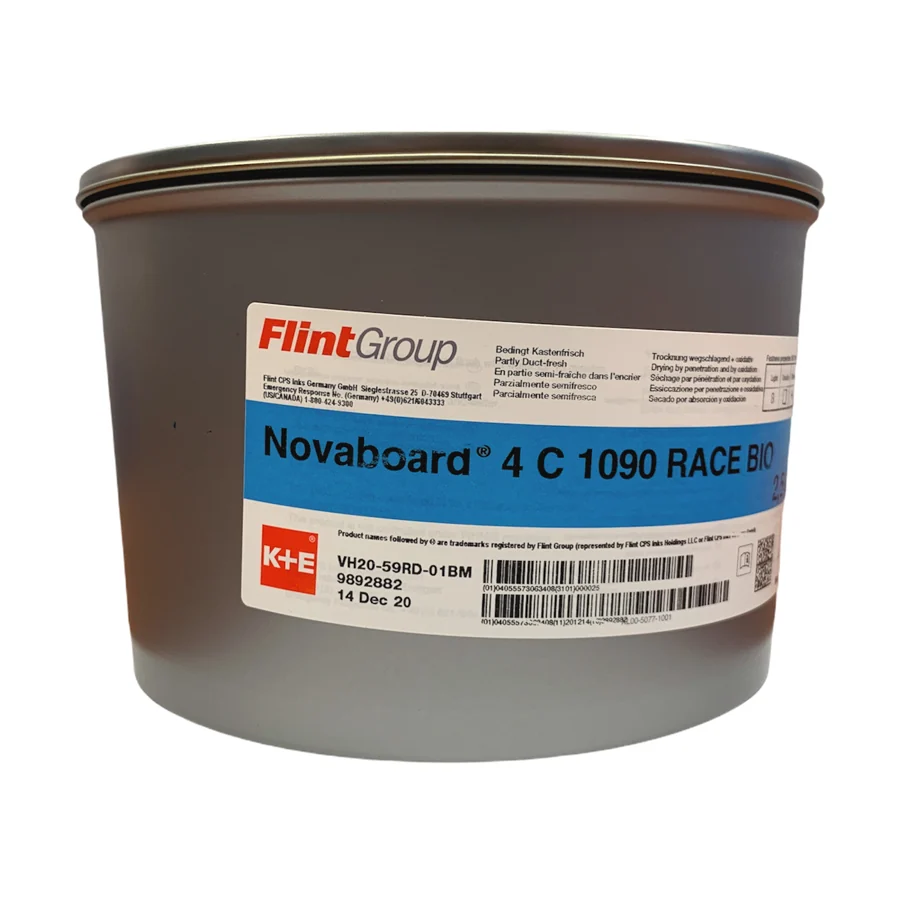
Choose C1090 RACE BIO when you require fast oxidative drying and high abrasion resistance. This series is based on renewable raw materials and includes CMYK process inks for sheetfed offset printing.
What are the benefits for your printing process?
Rapid setting and oxidative drying facilitate further processing.
High gloss and abrasion resistance enhance the durability of the print.
A stable ink-water balance also supports printing with reduced alcohol content.
What should you look out for?
Please verify suitability for your specific substrate before starting a print run.
Application and properties
Substrates
Uncoated and coated papers and paperboards: matte and glossy; also for papers prone to picking
Presses
Multicolor sheetfed presses, including those with perfecting capabilities
When very fast setting and efficient post-press processing are essential, consider F900 EXTREME BIO. This series remains fresh on the rollers and performs exceptionally well on glossy, coated substrates.
What are the benefits for your printing process?
Very high color intensity, gloss, and print sharpness.
High rub resistance; suitable for high-pile stacking.
Low tendency to cause substrate picking or ink build-up on the blanket.
What should you look out for?
Fast setting does not equate to full oxidative drying. The reduction of anti-set-off powder depends on the substrate and should be verified through testing.
Application and properties
Substrates
Especially for glossy coated papers and boards; also suitable for matte and uncoated stocks.
Presses
Multicolor sheetfed presses, including those with perfecting capabilities
Choose C990 FAUNA when you want to get a durable print and quickly proceed to further processing. The ink combines very high abrasion resistance with very fast oxidative drying.
What are the benefits for your printing process?
Low tack helps printing on papers prone to surface picking.
Stable ink-water balance facilitates work at high speeds.
High color intensity and renewable raw materials in the recipe.
What should you look out for?
The ink remains only partially fresh in the ink duct. Take into account breaks in work and check the print’s durability before processing.
Application and properties
Substrates
Coated and uncoated papers and boards
Presses
Multicolor sheetfed presses, including those with perfecting capabilities
Compare F950 FAUNA for perfecting jobs requiring fast setting. The ink remains duct-fresh and offers high colour strength and very good rub resistance.
What are the benefits for your printing process?
Very fast setting supports efficient finishing.
Stable ink-water balance and limited tendency to dust at high speed.
You can work with a reduced alcohol content in the fountain solution.
What should you look out for?
Fast setting does not mean complete drying. Test the print on your paper before finishing.
Application and properties
Substrates
Coated papers and boards: glossy and matte; also uncoated
Presses
Multicolor sheetfed presses, including those with perfecting capabilities
Confirm film adhesion in a print trial. For food packaging, assess migration, coating and the complete production process.
For foils and non-absorbent substrates
Novaplast® BIO
Are you printing on foil or other non-absorbent substrate? Select Novaplast BIO and perform an adhesion test before application. The series dries very quickly through oxidation and uses renewable raw materials in the binder.
What are the benefits for your printing process?
You can print with conventional sheetfed offset printing on non-absorbent substrates.
Very fast oxidative drying helps the ink dry without absorption into the substrate.
The series includes CMYK process inks.
What should you look out for?
Give as little water as possible: excess water delays or inhibits drying. Avoid long stops as the ink may dry on the machine. Use anti-set-off powder and low stacks. Do not use this series for food packaging without a functional barrier.
Application and properties
Substrates
Foils and other non-absorbent substrates – after adhesion test
Consider the P670 PRIME for printing food packaging without direct ink-to-product contact. The low migration and low odor series ensures high color intensity with a thin layer of ink.
What are the benefits for your printing process?
Fast setting through absorption supports packaging printing.
You can combine printing with inline water varnishing.
What should you look out for?
Always use inline water-based varnish. The ink sets only by absorption. Never add driers to the ink or fountain solution. Low migration alone does not guarantee finished packaging compliance. Check the substrate, complete process and required test results.
Application and properties
Substrates
Glossy and matte papers and coated boards
Presses
Sheet-fed machines printing in line, with inline varnishing
We use cookies that are necessary for the website, shopping cart, and account to function. Analytics and advertising features are currently disabled. You can review your cookie settings and our privacy policy here.
Necessary
Always active
Technical storage or access is strictly necessary for the legitimate purpose of enabling the use of a specific service explicitly requested by the subscriber or user, or solely for the purpose of transmitting a communication over an electronic communications network.
Preferences
Technical storage or access is necessary for the legitimate purpose of storing preferences that have not been requested by the subscriber or user.
Statistics
Technical storage or access used exclusively for statistical purposes.Technical storage or access used exclusively for anonymous statistical purposes. Absent a court order, voluntary compliance by an internet service provider, or additional records from a third party, information stored or retrieved solely for this purpose generally cannot be used to identify an individual user.
Marketing
Technical storage or access is required to create user profiles in order to send advertisements or to track the user across a website or multiple websites for similar marketing purposes.